

I’ve just been in Chad! I came as part of a small group visiting an extraordinary charity named African Parks. After landing in the capital, N’Djamena, we were greeted by its co-founder and leader, legendary conservationist Peter Fearnhead, who piled us onto a single prop plane for the two hour flight east to Zakouma National Park. This is the Sahel, meaning ‘shore’, the southern shore of the Sahara. The greater Zakouma region, spanning some twenty five thousand square kilometres, the size of Massachusetts, is a particular magnet for wildlife because the largely flat landscape floods seasonally, both from rainfall, and the annual overflow of the mighty Salamat river. This is why Zakouma is sometimes known as the Okavango of the Sahel.
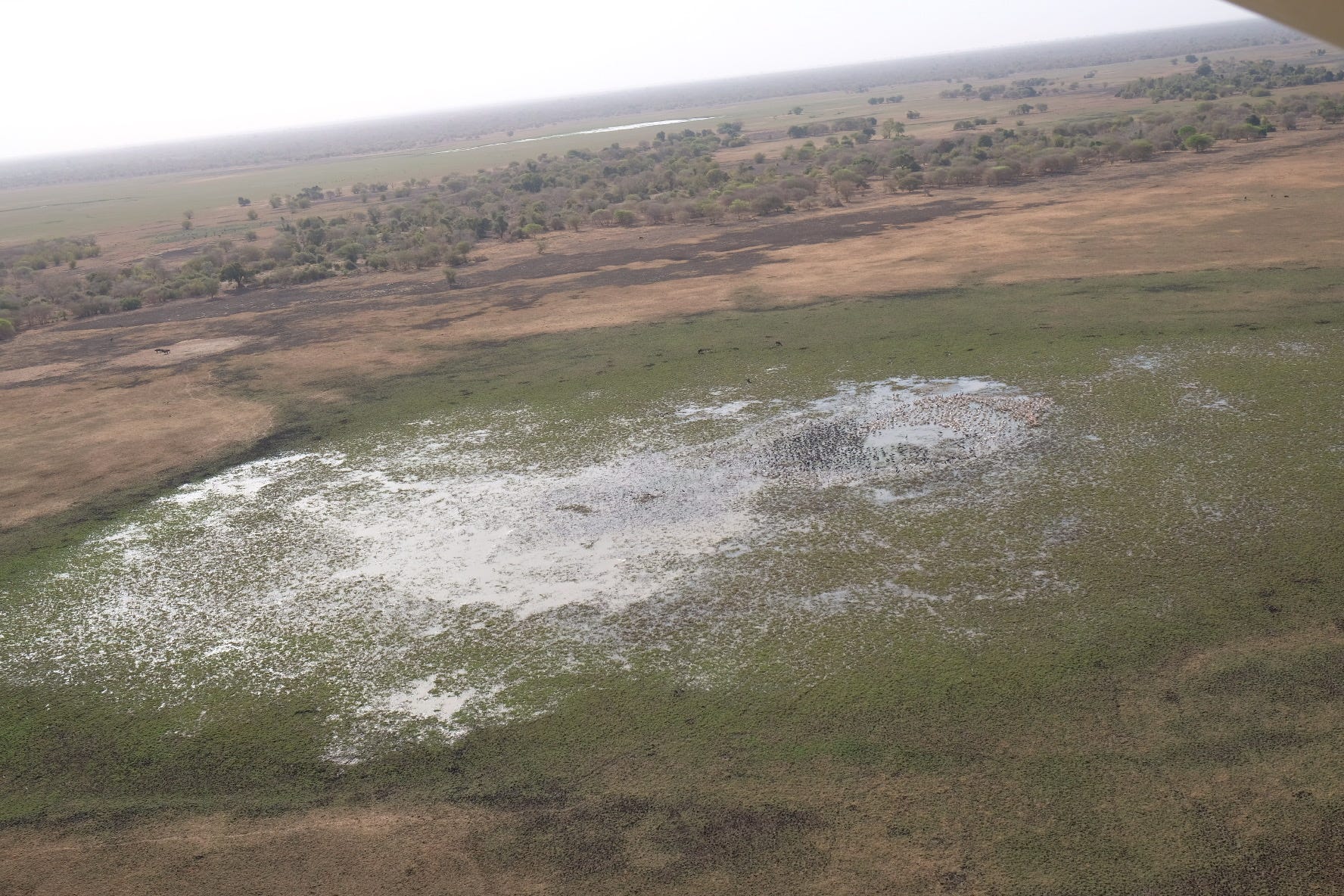
Decades of poaching by Sudanese Janjaweed militias and highly armed, organised criminal networks left wildlife in Zakouma decimated and local people destitute. I’ve been told appalling stories here of whole elephant families machine gunned at their watering spots, and local girls abducted across the border into neighbouring Sudan. There was nearly nothing left, as is the case across the rest of Chad, until 2010 when, at the invitation of the Chadian government, African Parks took on management of the park. The results have been breathtaking. Bouncing in low over a great savannah and wetland mosaic, now in its dryest season, I could see that the largest pans retain some water at this time of year, the rest are flat, brown and dotted with countless wild herbivores.
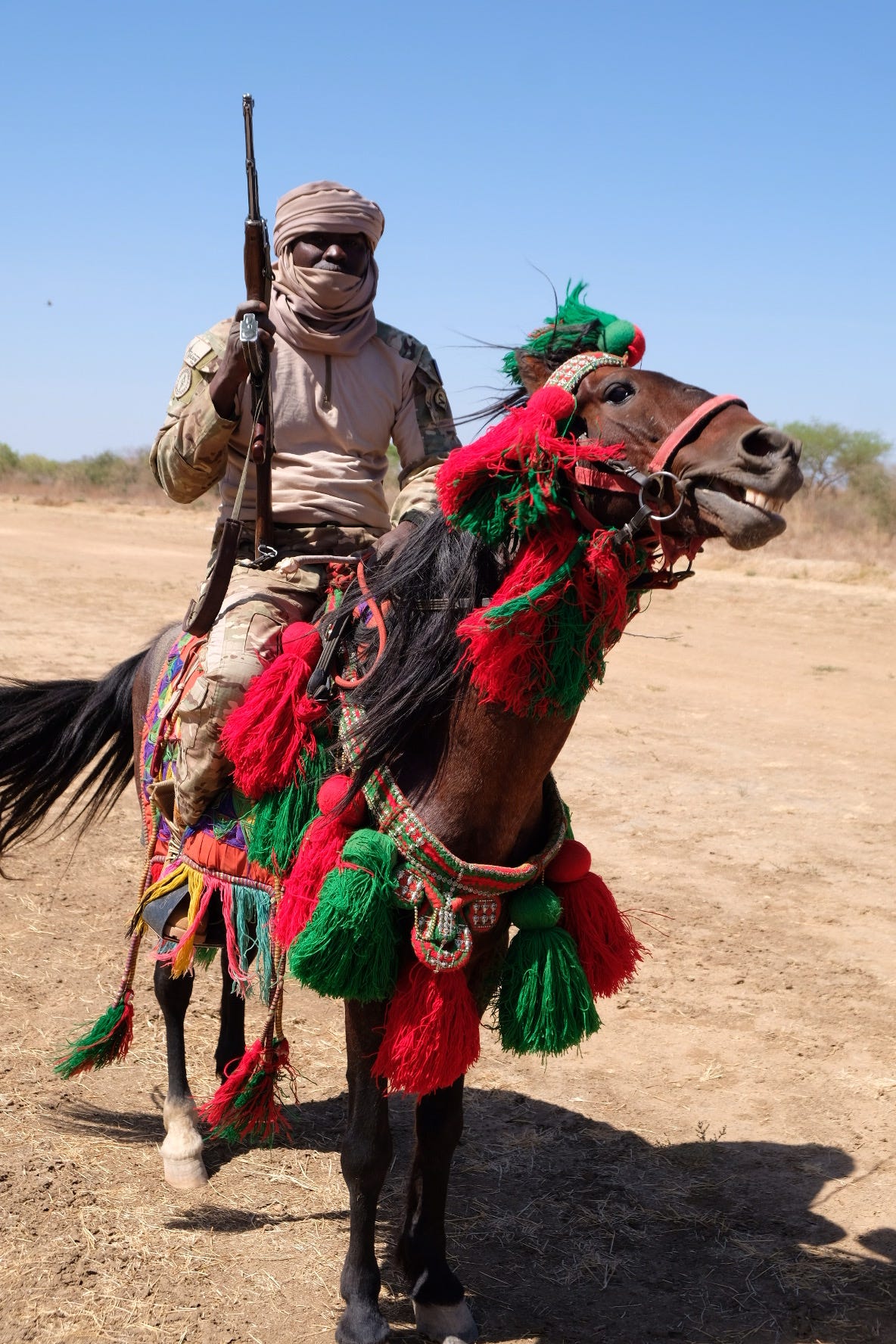
Arriving to a flamboyant display by the rangers on the dirt landing strip, and an ice cold cup of hibiscus tea each, we received our first briefing. In total, African Parks employs three hundred Chadians at Zakouma, included in which an impeccably trained ranger force which has all but eliminated poaching. Rangers patrol in a blend of camouflage and traditional garb, on horseback, motorbikes, jeeps (some of which captured from the poachers themselves), tiny planes and even kayaks. The operations centre and armoury are a sight to behold; conservation in Africa is not for the faint hearted, and the good guys most definitely need to be armed. African Parks is not only the largest employer now in the region, but also the largest educator and healthcare provider. Wildlife is resurgent. The park is a triumph and has become a source of pride for all Chadians.
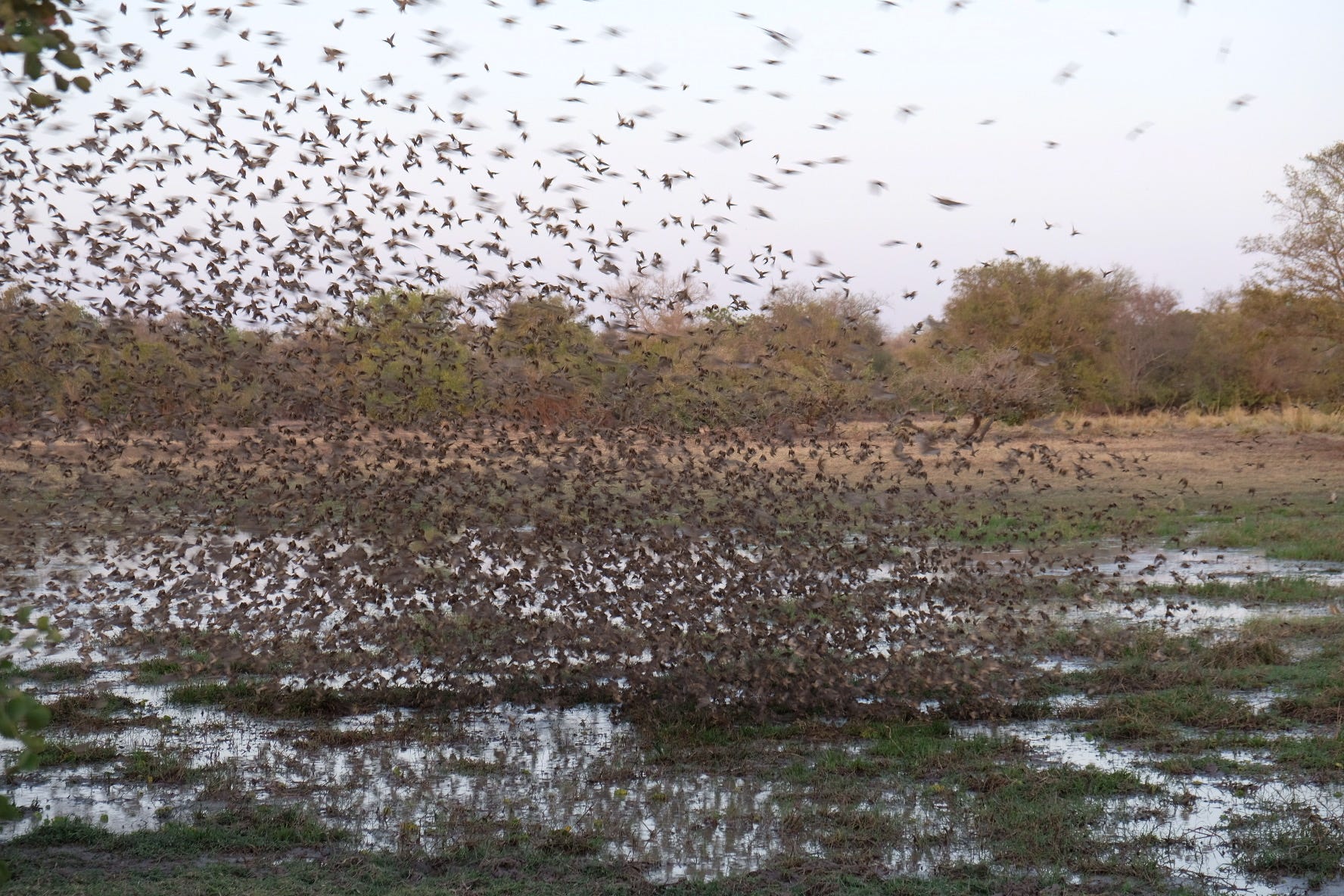
It’s difficult to describe in words or with photographs the sheer abundance and vibrancy here. It’s like nothing I’ve ever experienced. The place simply thrums with life. Herds of elephants, giraffes, buffalo, hartebeest, tiang, cob, waterbuck, kudu, gazelles grazing and browsing the last vegetation before the rains return; warthogs rootling; crocodiles basking by the thousand; and birds everywhere. Limitless storks, herons and hornbills congregate around the remaining water, kingfishers flitting back and forth over the water, fishing eagles, harriers and vultures and vast flocks of quelea which at fist and last light arrive in murmurations millions strong, forming huge genies shape-shifting above our heads. Lions number once again in the hundreds, and cheetahs, spotted and striped hyenas have returned as well. Everywhere you look there is life.
Sitting outside my small tent amid the sunset cacophony one evening it dawned on me that this kind of abundance was once to be found in places all over the world; even in Britain. Imagine the Somerset Levels before we drained and desecrated our most sacred landscape in the way that we have. We can have life back, if we choose it. It really is a choice. The Chadian government made a choice to restore Zakouma. We too can make the same choice in our most precious landscapes.
Asleep on my second night I was woken by the deep growl of a lioness passing just metres by my flimsy tent, just a mosquito net between me and her. The sound rippled through my bones, and I felt a terror the likes of which I remember only from fever dreams of childhood. I froze in my bed, eyes wide open and thankfully she moved on. The nights here are studded by the grunts and roars, clacks and splashes of animals which could crush or crunch me without a moment’s consideration, although of course we were perfectly safe within the camp. Being among wildlife like this reminded me of the risible fear so many Britons have of our own much less scary wildlife, wild boar, red deer, lynx and wolves; animals which have as much right to live in our landscapes as we do.
African Parks is perhaps the most effective and important rewilding organisation in the world today. Its co-founder and leader Peter Fearnhead, who travelled with us, is truly an inspiration. The charity he has built manages twenty-three protected areas now in thirteen countries, deliberately restoring wildlife across an area spanning more than 600,000 square kilometres. Peter described to me plans for connecting many of these vast areas with corridors; and African Parks’ recent acquisition of a bankrupt rhino farm in South African comprising fifteen percent of all the white rhinos in the world. The rhinos are now being translocated to locations across Africa, some of which haven’t had rhinos for decades. Governments are listening. Communities are engaged. Funding is coming in. It’s happening. Please do follow and support this extraordinary charity. The future of Africa’s wildlife and its wildest places depends on them.
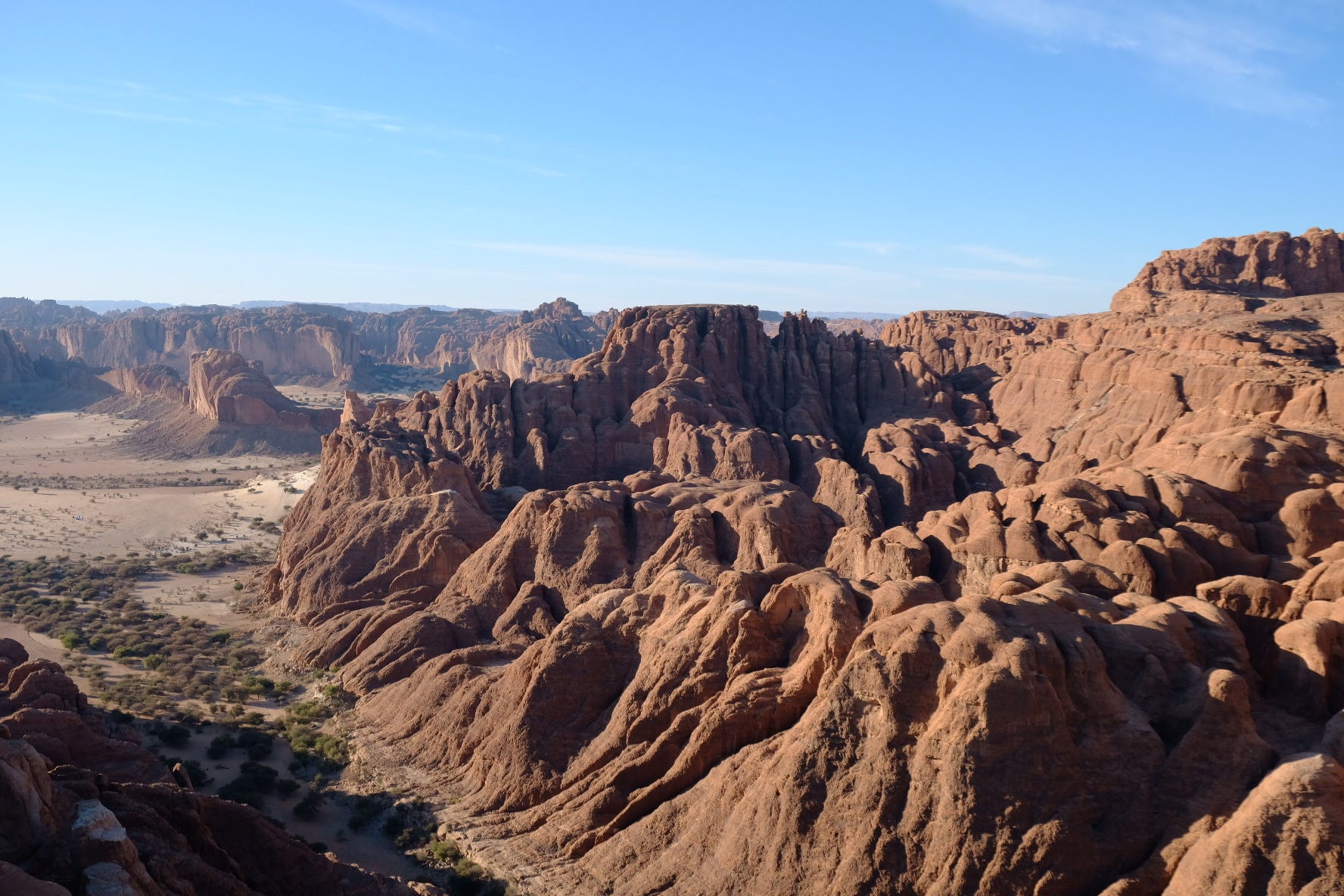
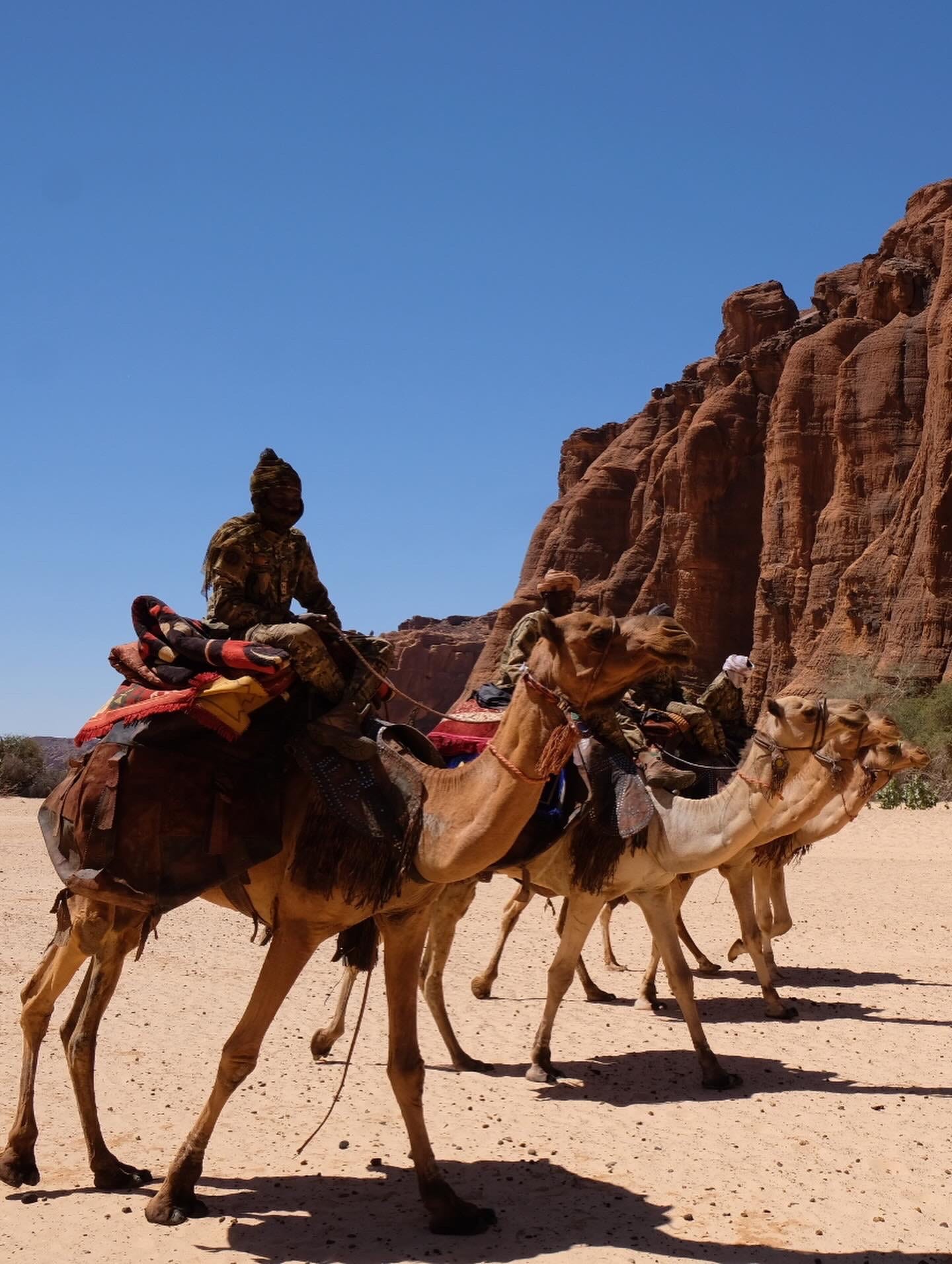
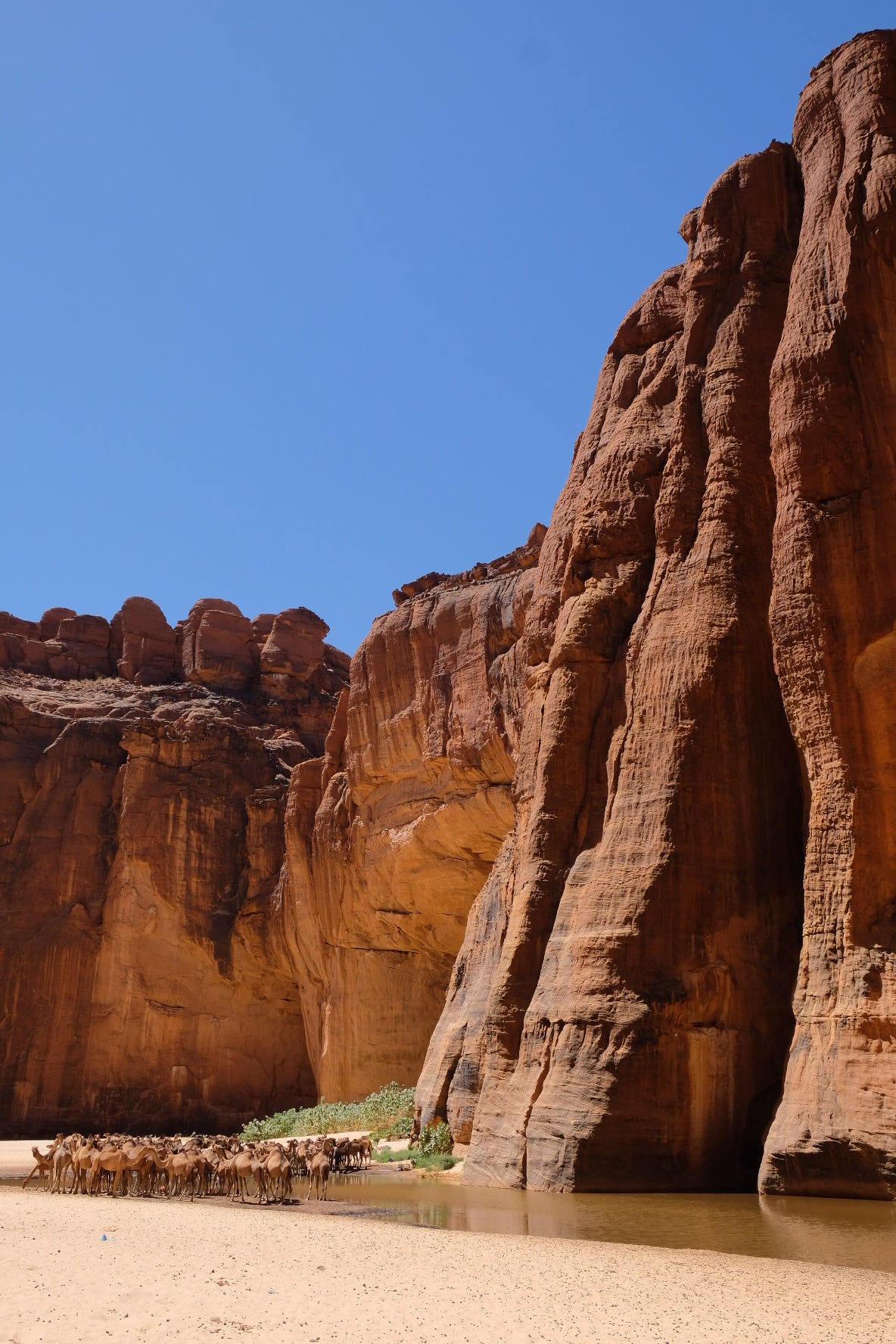
From Zakouma we hopped back onto the same properllor plane to fly two hours north to another Chadian park managed by African Parks, Ennedi Natural and Cultural Reserve. Ennedi spans more than fifty thousand square kilometres (five million hectares, the size of Croatia) in the heart of the Sahara. Its famous for extraordinary, rock formations stretching to the horizon in all directions, arches and labyrinths, oases, ancient rock art and funeral mounds.
Ennedi differs vastly from Zakouma. This is a remote desert landscape in which nomadic and pastoral communities numbering about fifty thousand live and work. This of course presents a different set of challenges, of which overgrazing by domestic livestock, goats, sheep and camels, is a big one (sound familiar?). Moreover, livestock animals represent a store of wealth, whereas wild animals offer a free lunch. So poaching, especially since the since the arrival of cheap motorcycles and guns, has wiped out all but a scant few dorcas gazelles and Barbary sheep. Everything else is gone.
The community however, alongside the Reserve and African Parks, is now united in its determination to restore its lost wildlife, animals which have been central to their culture for millennia. They understand what they’ve lost, and now they want it back. This sensitive Saharan ecosystem here, which comprises huge areas with very little water, once supported large, mobile herds of Addax, a brilliant-white antelope which, astonishingly, derives all of its water needs from the plants it eats; majestic scimitar-horned oryx; dorcas and dama gazelles; African wild ass and Barbary sheep in the rockier areas.
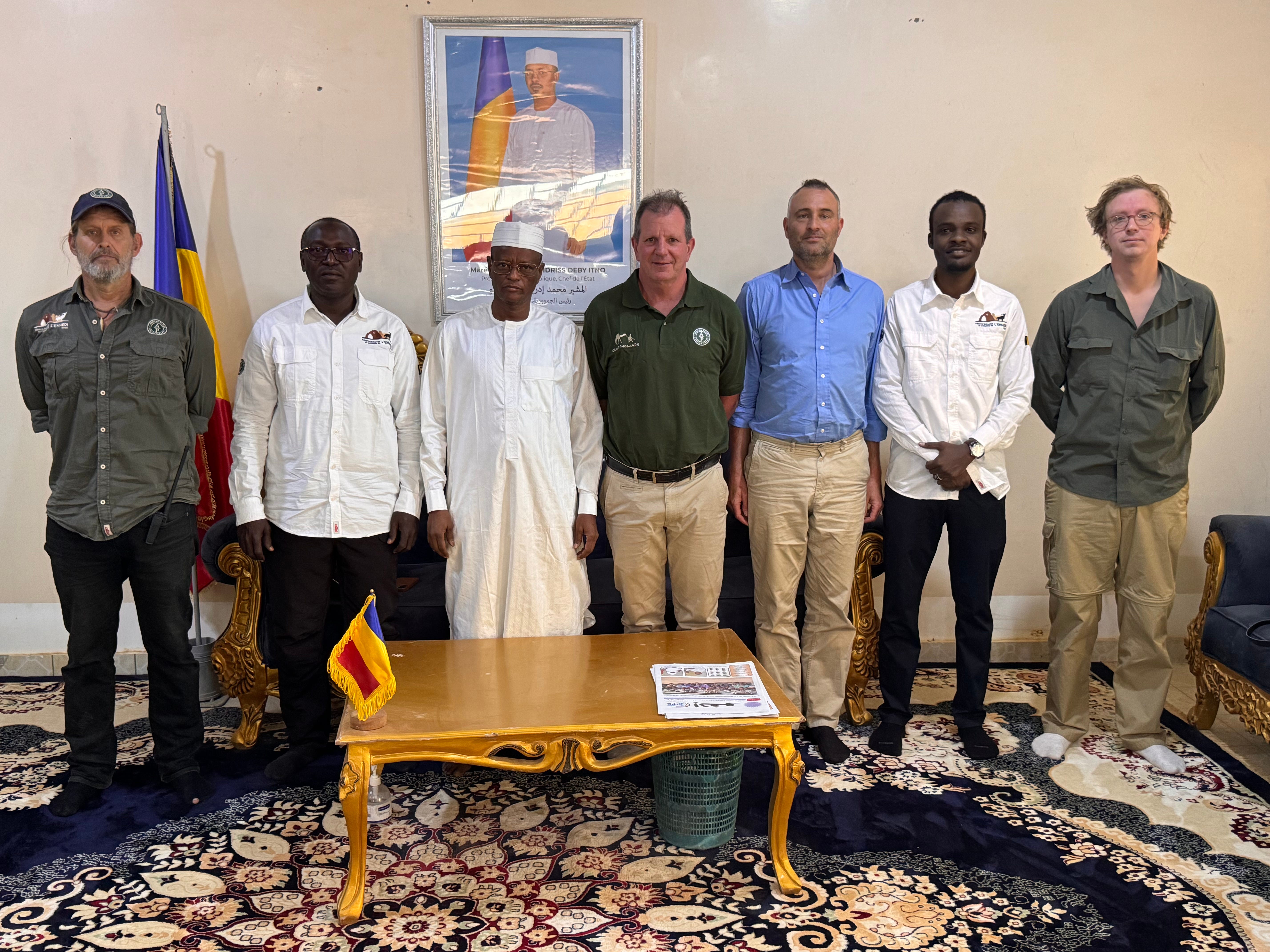
I tagged along with Peter and his team in meeting the local governor at his compound. Various family members dozed in the shade outside. A small boy eyed me suspiciously before breaking a white-toothed grin. African Parks is the second largest employee in this vast region, after the Chadian government. The governor expressed his support and gratitude for the charity’s work; as well as his wish to restore the vegetation he knew as a young man.
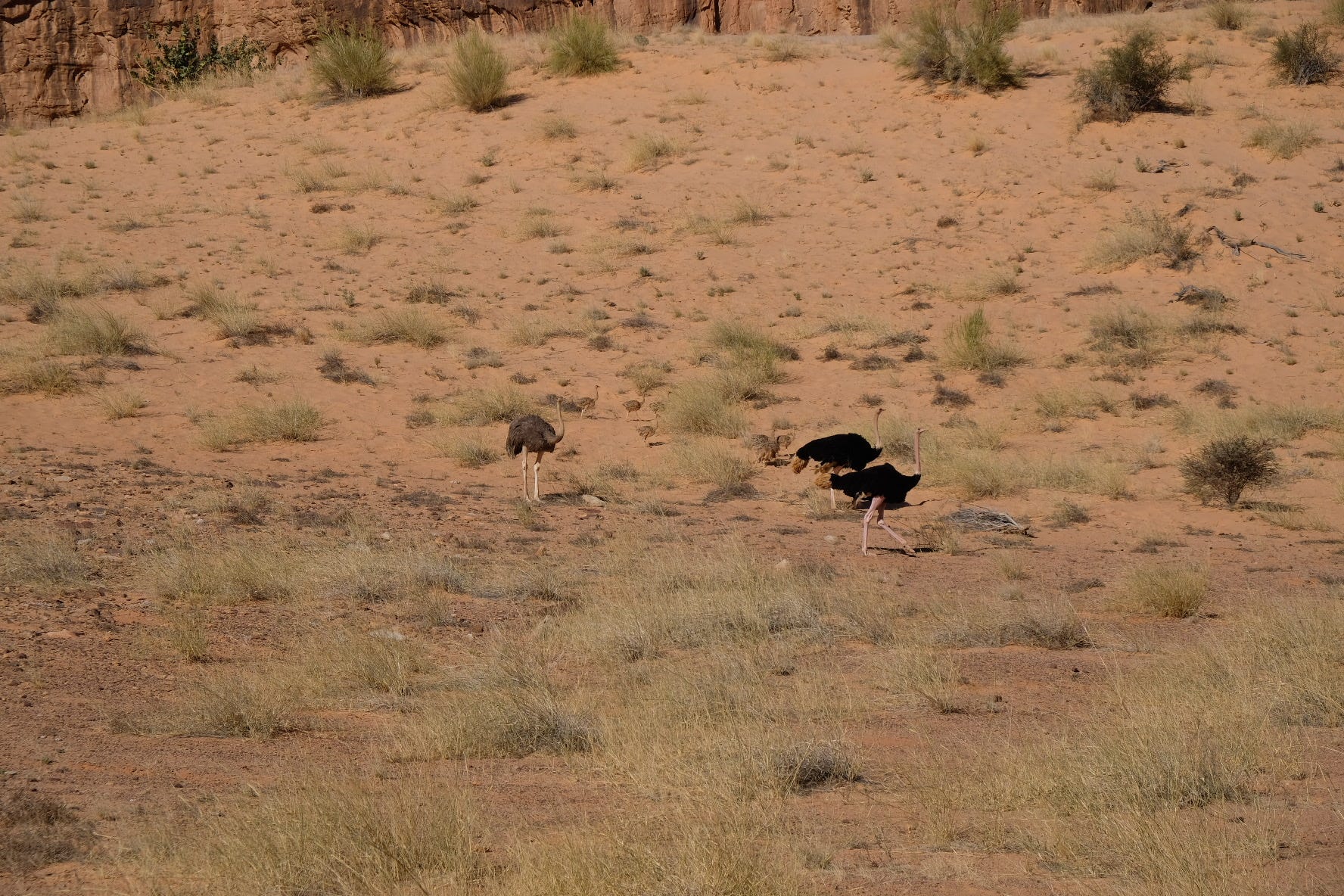
Having made great strides towards eliminating poaching of wildlife, with the help of the community, African Parks is actively reintroducing each of these lost mammals here in growing numbers. The charity is also restoring another critically endangered species, the red-necked ostrich, which now number more than a hundred in the reserve. I was lucky enough to spot a pair with ten spotty pompom young in tow. The goal of course is tens of thousands of each of these species. Long term, this is ideal wide-open arid grassland habitat for desert cheetahs too, free from competition with lions, leopards and spotted hyenas.
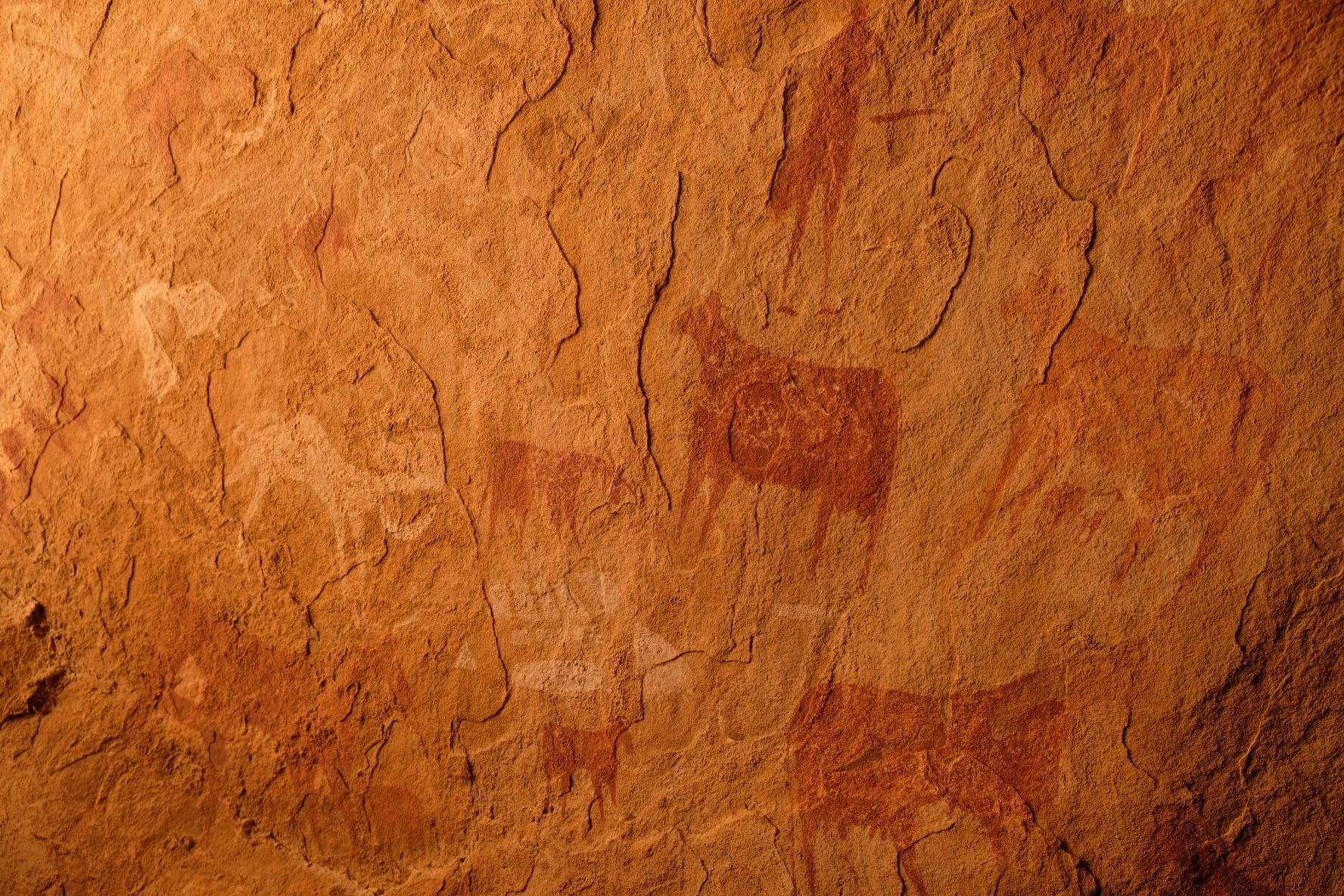
Striped hyenas and jackals are still found here, and we saw patas monkeys sprinting across the sand like gazelles; a pair of fennec foxes; Sahara hares; a family of baboons barking from their verdant territory within a steep-sided, rocky oasis at the top of a gorge; and a pair of black eagles soaring high overhead. But this vast landscape is famous for more than its fabled wildlife. This is a land of ancient rock formations with chimney-like turrets, rock labyrinths and towering arches; of millennia-old cave paintings depicting long-lost wildlife and of funeral mounds which pre-date Islam by as much as seven thousand years. Apart from the wildlife, it’s all still here.
This region is not as universally poor as people might think; camels in particular are worth as much as a thousand dollars each (racing ones more than that still), and some nomadic families have up to a thousand camels, as well as large numbers of goats and sheep. While the local governor is considering a cap on the price of wives, no such cap is proposed for livestock. The result is overgrazing across enormous areas. Livestock, often herded by young boys, reaches every last patch of forage, leaving little for any wild ungulates which may return to the park.
Moreover, I saw precious little recruitment of new young acacia and the other Saharan trees which otherwise dot the landscape. There’s talk of developing wild animal tokens which might come to represent an alternative store of wealth and prestige for the people here. An Addax token may become the Bitcoin of the Sahara. We shall see. Meanwhile, African Parks is working closely with tribal leaders to set aside crucial areas from grazing by domestic livestock, a bit like marine no take zones, but for desert vegetation.
Thank God for this extraordinary charity; for its leader Peter Fearnhead, a brilliant, steely yet gentle and kind man; for the hundreds of Chadians who protect and manage these two parks, and for the wisdom of the Chadian government in choosing this future for both. Please follow and consider supporting African Parks!
Amazing story Ben — your reportage and stunning photography all very positive in these horrible political & ecological times. Bravo to you x
this is such an uplifting account of a place I knew hardly anything about - Sounds absolutely amazing.